British Pub Etiquette: Ordering, Rounds and Tipping
Visiting a London pub for the first time? Learn how ordering at the bar works, what buying a round means and how tipping usually works.

Not sure what to eat in a London pub? Compare pies, Scotch eggs, fish and chips and Sunday roasts, with practical tips for choosing from the menu.
A Scotch egg makes a different sort of lunch from a pie with mash. A Sunday roast is a different plan again. If you’re wondering what to eat in a London pub, start with how hungry you are, then read what comes with the dish. Familiar names can hide quite different portions and accompaniments.
This guide explains the food rather than ranking venues. The dishes below are examples of British pub food, not a menu guaranteed at every pub or a list of tastings included on a tour.
First, check that the pub serves meals. VisitBritain distinguishes food-focused gastropubs from traditional pubs, some of which may not serve meals at all.[1] Once you’ve found a menu you like, ask whether the kitchen is serving and how to order. Don’t build the afternoon around a dish before checking it is available.
Decide whether you want a snack or a sit-down meal. If you’re stopping between other plans, look at the smaller plates and ask about portion sizes. If this is lunch, read the mains and their accompaniments before adding sides. A dish’s name won’t tell you everything you need to know.
When ordering, a useful question is: “Does that come with potatoes or vegetables, or should I order those separately?” It gives you a clearer idea of both the meal and the bill. Check drinks separately too; our guide to beer costs covers that part of planning.
A traditional Scotch egg is a boiled egg wrapped in sausage meat and coated in breadcrumbs. VisitBritain describes both soft- and hard-boiled versions, so a runny centre isn’t part of the definition.[2] Fortnum & Mason’s own account also describes variations in ingredients and egg size.[4]
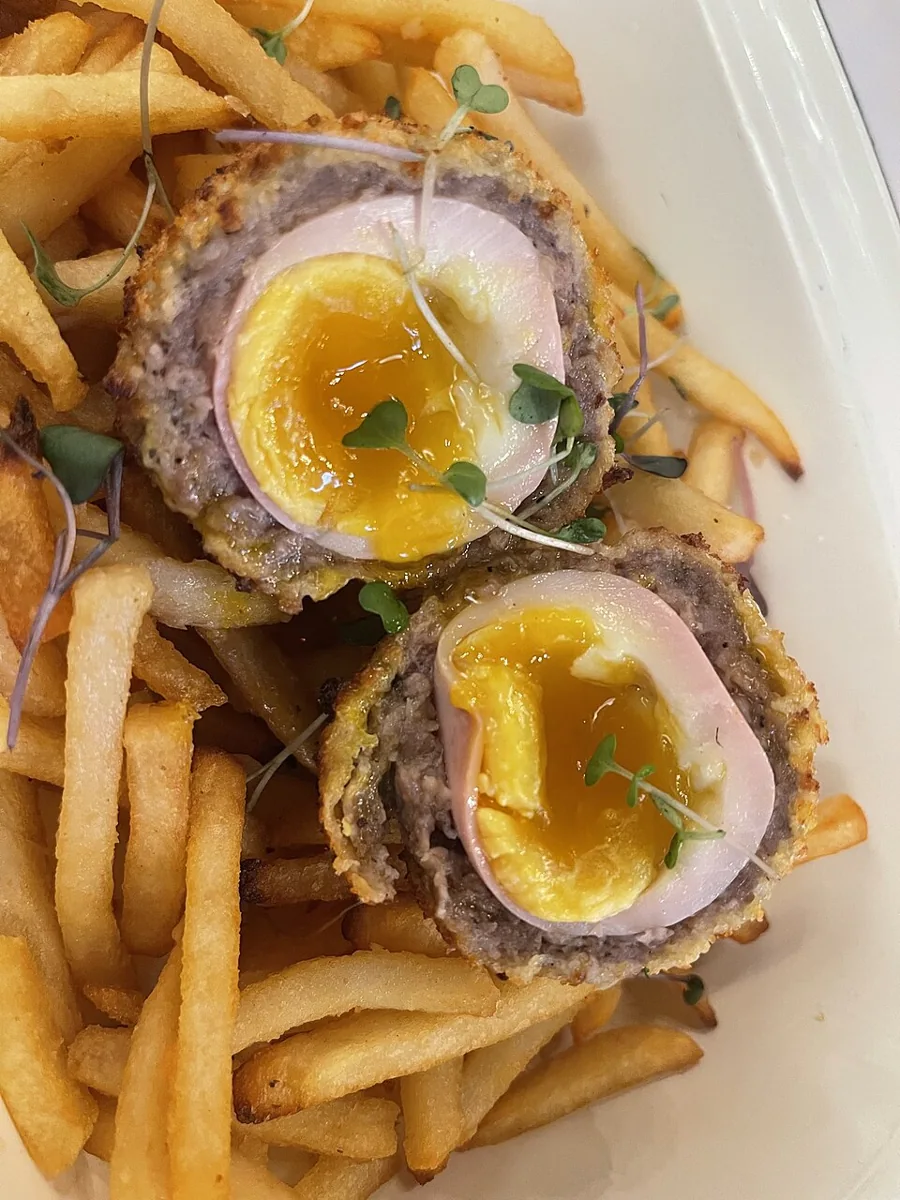
If you’re choosing a smaller bite, look at the Scotch egg’s position on the menu. Is it listed among snacks, starters or something more substantial? Ask what comes with it and whether one portion is enough for what you have in mind. An egg on its own and a plate with accompaniments are different orders.
For a group, ask whether the dish is suitable for sharing before assuming it will arrive cut into enough pieces. If you don’t eat meat, don’t mistake the egg in the name for a vegetarian dish. Read the actual description and ask about the version the kitchen makes.
VisitBritain includes pie and mash among Britain’s comfort-food experiences.[2] For your own lunch, the useful detail is the filling. Read the full description rather than stopping at “pie”: choose something you want to eat, then check the pastry and sides with staff if the wording leaves you unsure.
A pie can be the centre of a substantial meal, but don’t assume mash, vegetables and gravy are all included. Ask what arrives on the plate. If two people are deciding between different dishes, checking the accompaniments makes a more useful comparison than looking at the main ingredient alone.
Treat ingredients in the filling and sauce as ingredients worth asking about, particularly if you avoid alcohol or have dietary requirements. A dish’s name isn’t enough information to establish suitability. Nor does “traditional” tell you how this kitchen prepares it.
If your aim is simply a comforting sit-down lunch, you don’t need to find the oldest recipe or the most elaborate description. Pick a filling you like, check the complete order and leave enough time to enjoy the meal.
VisitBritain describes fish and chips as battered, fried fish with chips. Bangers and mash means sausages and mashed potato, usually with gravy and sometimes peas.[2] Those definitions are a starting point, not a promise about a particular pub’s plate.
If you want fish, read which fish is listed and ask about the accompaniments. If you’d prefer sausages with mashed potato, read the sausage description as carefully as you would a pie filling. The menu may answer your questions; if it doesn’t, ask before ordering.
Choose by what you feel like eating rather than by which dish sounds more British. You aren’t sitting an exam in national cuisine. If you’re sharing sides, check what the mains already include so you don’t order duplicates by accident. And if the menu has a vegetarian version, judge that specific dish on its description rather than assuming it is identical to the meat version with one ingredient swapped.
VisitBritain presents the Sunday roast as a meal for gathering with family and friends and points to both traditional pub settings and other dining options.[2] If that is the experience you’re after, plan around the meal rather than hoping to fit it into a quick drinks stop.
Check the pub’s Sunday menu, kitchen times and booking arrangements. Ask what the roast includes and which choices will be available when you visit. Don’t assume a Sunday menu runs every day, or that a dish shown online is available throughout the afternoon.
For a group, agree that you’re planning lunch before choosing a time. Someone expecting a brief stop for a drink may have a very different afternoon in mind. If the roast is the main reason for going, confirm it with the pub before setting out.
Tell staff about allergies or intolerances clearly, and ask about preparation as well as ingredients. The Food Standards Agency advises checking ahead, discussing requirements when ordering and asking about possible cross-contamination or recipe changes.[5]
Don’t use this guide, a familiar dish name or a vegan label as an allergy-safety check. The FSA specifically warns that food labelled vegan can still present an allergen cross-contamination risk.[5] If staff cannot give you confidence that they understand your requirements, its advice is not to eat there.[5] The same advance conversation matters when considering a food tour; confirm your needs directly before booking rather than assuming the itinerary can accommodate them.
For an independent meal, choose the pub by its current menu and the kind of lunch you want. A snack between visits, a pie with sides and a Sunday roast each suit a different amount of time and appetite.
If you’d rather explore pub food with a guide, read about the separate Pub Food Tour and check its booking options. Read the current details and confirm any dietary requirements before booking. The dishes in this article explain menu choices; they are not a promised tasting list.
If your main interest is the stories behind London’s pubs rather than a meal, check availability for the historic group pub tour instead.
Sources checked on 22 November 2026.
Visiting a London pub for the first time? Learn how ordering at the bar works, what buying a round means and how tipping usually works.
From the riverside Dove to the Michelin-starred Harwood Arms, here are the best pubs to visit in London, chosen by the local guides who know them best.
London is home to some of the oldest pubs in the world. A local guide’s pick of the most historic pubs in London, and the stories that make them worth a visit.

If you go to the UK as a tourist, it’s a good idea to try out some of the local beers. As we know, the pint is not just a drink in the UK.